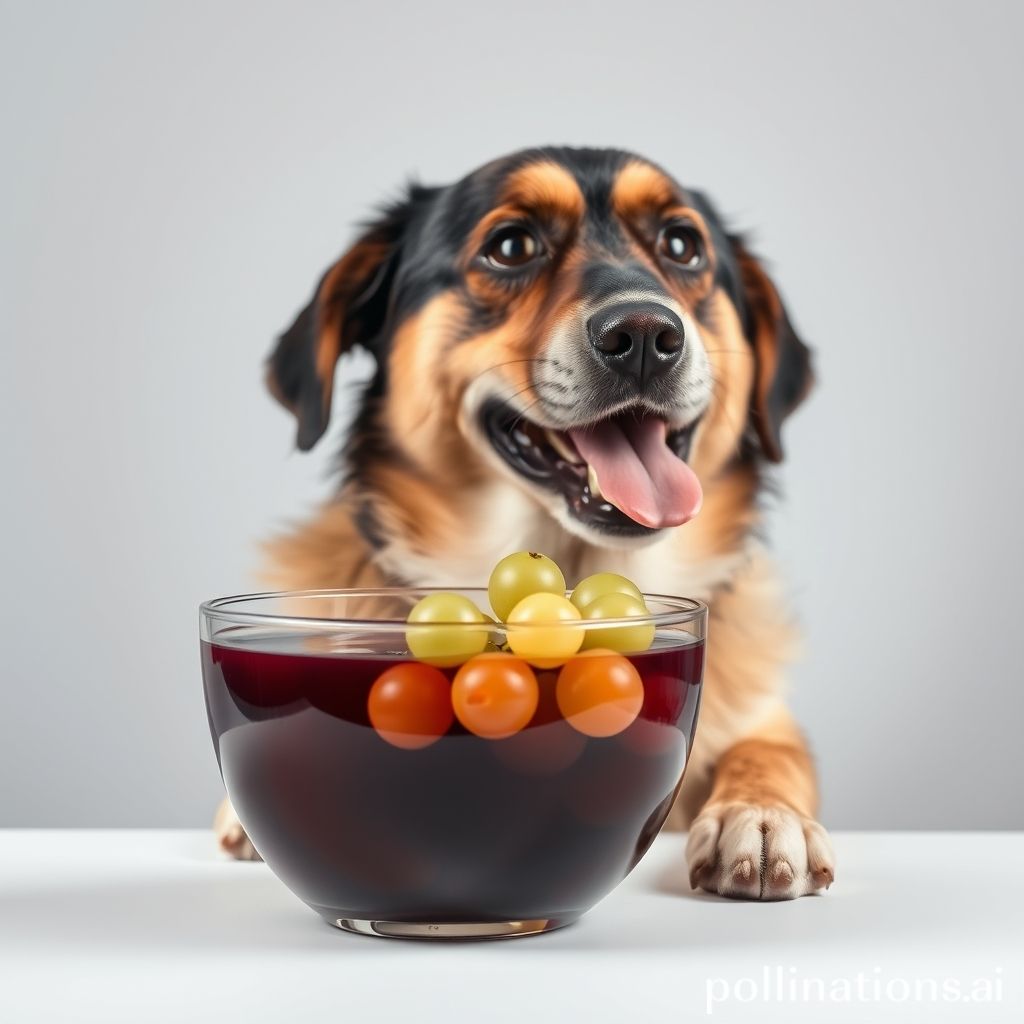
In North America, the most common grape juice is purple and made from Concord grapes, while white grape juice is commonly made from Niagara grapes, both of which are varieties of native American grapes, a different species from European wine grapes.
How Much Grape Juice Is Toxic To Dogs Grapes and grape products, such as grape juice, are a popular and refreshing treat for many people. However, when it comes to our furry friends, grapes can be extremely toxic to dogs. Even a small amount of grape juice can be harmful and potentially fatal to our canine companions. Is all grape juice dangerous for dogs? While grape juice may contain less toxic compounds than whole grapes, it still poses a risk and should be avoided to ensure your dog's safety. What should I do if my dog shows symptoms after ingesting grape juice? If your dog exhibits any symptoms of poisoning, seek immediate veterinary attention. Products such as grape juice, jelly, leaves, grape seed oil and wine have not been associated with toxicosis, likely because processing removes or reduces tartaric acid. Because tartaric acid content can vary widely and sensitivity differs between dogs, the exact toxic dose or number of ingested grapes that can cause harm is not entirely known. In reality, all dogs, regardless of breed, age, or size, can experience adverse effects from consuming grapes or grape products. Another misconception is that grape juice is safe for dogs because it is a liquid form of grapes. However, grape juice contains the same toxic substances as whole grapes, making it equally dangerous for canine ... Why Concord Grapes Are Dangerous for Dogs Concord grapes, although a delicious and nutritious fruit for humans, pose a serious threat to dogs. These grapes contain unknown toxins that can trigger acute kidney failure in canines. Preventing Future Incidents To prevent future incidents, keep all grape products, including juice, out of your dogs reach. Educate family members and guests about the dangers of grapes to dogs. Additional Resources For more information on foods that are toxic to dogs, you can visit the ASPCAs list of toxic foods. Understanding the Risks The risks associated with grape consumption in dogs are significant. Even small amounts of grapes or raisins can cause severe health issues, including vomiting, diarrhea, lethargy, and lack of appetite. In severe cases, grape toxicity can lead to kidney failure, which can be fatal if left untreated. What happens if a dog eats grapes? Grape and raisin toxicosis happen when a dog ingests fruits from the Vitis genus. Eating grapes, raisins, Zante currants, or sultanas can cause acute kidney injury (AKI) in dogs. The exact amount of fruit that causes toxicity is unknown, and some dogs may become sicker than others. How long does a grape stay in a dog's poop? Fruit may remain visible in vomit up to 12 hours after ingestion. Your veterinarian may recommend blood and urine tests to evaluate kidney function and other abnormalities associated with grape ingestion. Since blood levels may be normal within the first few hours after ingestion, repeat testing may be recommended over two to three days. Is there an antidote for grape or raisin toxicity? There is no specific antidote for grape or raisin toxicity. Treatment focuses on removing any remaining fruit to prevent further absorption of toxin (decontamination) and supportive care. For recent ingestion with no clinical signs of illness, your veterinarian will induce vomiting.
Is all grape juice dangerous for dogs? While grape juice may contain less toxic compounds than whole grapes, it still poses a risk and should be avoided to ensure your dog's safety. What should I do if my dog shows symptoms after ingesting grape juice? If your dog exhibits any symptoms of poisoning, seek immediate veterinary attention.

Products such as grape juice, jelly, leaves, grape seed oil and wine have not been associated with toxicosis, likely because processing removes or reduces tartaric acid. Because tartaric acid content can vary widely and sensitivity differs between dogs, the exact toxic dose or number of ingested grapes that can cause harm is not entirely known.
In reality, all dogs, regardless of breed, age, or size, can experience adverse effects from consuming grapes or grape products. Another misconception is that grape juice is safe for dogs because it is a liquid form of grapes. However, grape juice contains the same toxic substances as whole grapes, making it equally dangerous for canine ...
The main risk is sodium in pickle juice. Pickle brine is mostly salt and preservatives. This high sodium can harm your dogs health. Vinegar and spices can also upset their stomach.
Concord Grape Juice is the GOAT Juice. Welch's Concord Grape Juice has been found by Consumer Reports to have so much lead that 4 ounces or more per day poses health risks to both children AND adults. This report came out five years ago (2019).